Just out: Ann-Kathrin Stähle, Quid poema frangat? Zur Poetik des Bruchs in den Carmina des Sidonius Apollinaris, Hermes Einzelschriften 127, Stuttgart: Franz Steiner, 2025.
Item in catalogue here
Just out: Ann-Kathrin Stähle, Quid poema frangat? Zur Poetik des Bruchs in den Carmina des Sidonius Apollinaris, Hermes Einzelschriften 127, Stuttgart: Franz Steiner, 2025.
Item in catalogue here
Gilles Quentel published L’Émergence de l’article défini du latin classique aux premiers textes français, Études de linguistique, littérature et art 71, Berlin: Peter Lang, 2025.
Here is to the publisher’s catalogue. Section 3.2.1 ‘Sidoine Apollinaire: Epistulae‘
Nicholas Hudson has written Dining at the End of Antiquity: Class, Status, and Identity at Roman Tables, Oakland: UCPress, 2024.
Here is to the catalogue
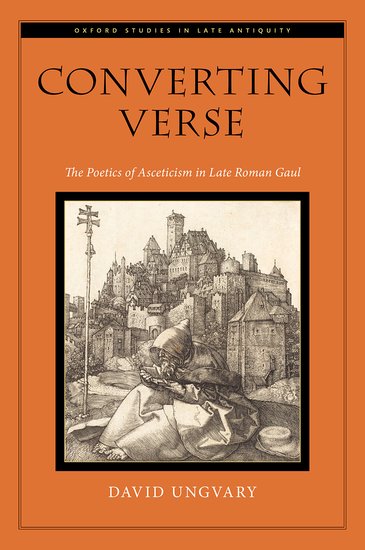
David Ungvary wrote Converting Verse: The Poetics of Asceticism in Late Roman Gaul, Oxford Studies in Late Antiquity, Oxford: OUP, 2024.
See item in catalogue here
Has a chapter on Sidonius: ‘Announcing Renunciation: Sidonius Apollinaris and Poetic Disavowal’. The blurb reads:
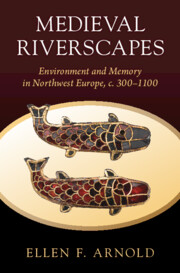
Ellen Arnold wrote Medieval Riverscapes: Environment and Memory in Northwest Europe, c. 300-1100, Cambridge: CUP, 2024.
Check it in the catalogue. Late antique Gaul is treated on pp. 15-64.
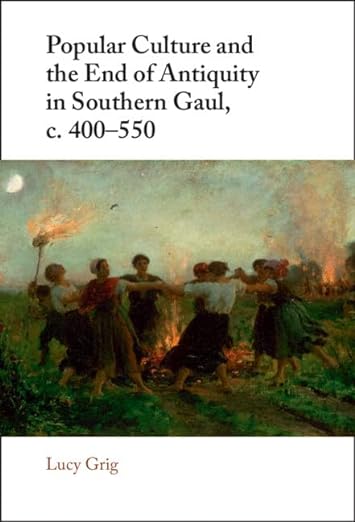
Lucy Grig has put out Popular Culture and the End of Antiquity in Southern Gaul, c. 400–550, Cambridge: CUP.
Go to catalogue
ToC
1 Introduction: Popular Culture and the Study of (Late) Ancient History 1
2 Urban Contexts for Popular Culture in an Age of Transformation 36
3 Popular Culture, Society and Economy: The Countryside in Transition in Late Antiquity 73
4 Christianizing Popular Culture: The View ‘from the Pulpit’ 110
5 An Alternative View: Lived Religion As Popular Culture 144
6 The Kalends of January: The Persistence of Popular Culture 173
7 Conclusions: Popular Culture and the End of Antiquity? 219
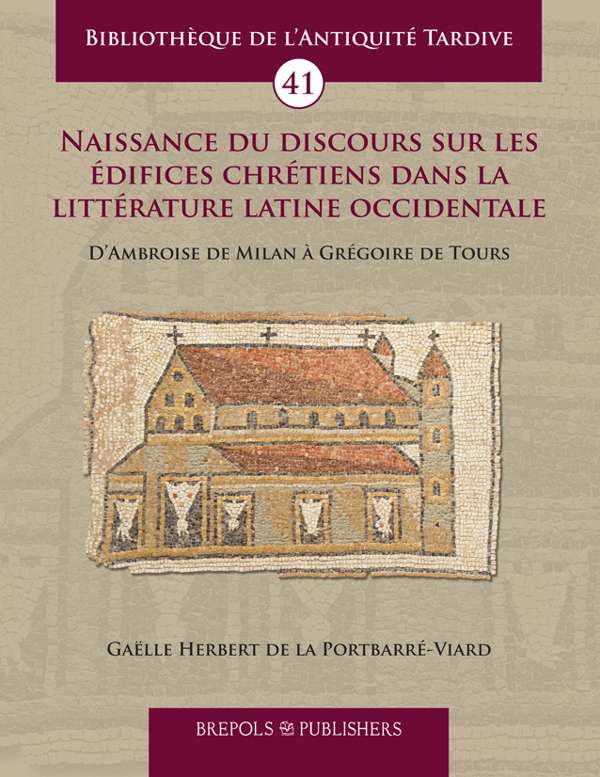
Gaëlle Herbert de la Portbarré-Viard has put out a detailed study of the terminology of Christian buildings: Naissance du discours sur les édifices chrétiens dans la littérature latine occidentale: d’Ambroise de Milan à Grégoire de Tours, Turnhout: Brepols, 2023.
Here goes to the publisher’s catalogue
As to Sidonius, the book discusses: Les descriptions d’édifices religieux dans l’œuvre de Sidoine Apollinaire | Les vers consacrés à la description de l’église de Lyon, à la demande de l’évêque Patiens et leur présentation par Sidoine, Lettre 2, 10, 2-4 | Nouvelle évocation de l’œuvre édificatrice de Patiens de Lyon, Lettre 6, 12, 3-4 | Évocation de la reconstruction (ou agrandissement) de la basilique Saint-Martin de Tours et les vers que Sidoine a composés à ce sujet à la demande de l’évêque Perpetuus, Lettre 4, 18, 4 | Autres passages de Sidoine Apollinaire évoquant avec un certain degré de précision des édifices religieux.
Its second part is a full glossary of the vocabulary of the description of Christian buildings.
Just out: Veronika Egetenmeyr, Die Konstruktion der ‘Anderen’. Barbarenbilder in den Briefen des Sidonius Apollinaris, Philippika 165, Wiesbaden: Harrassowitz, 2022.
Find it here
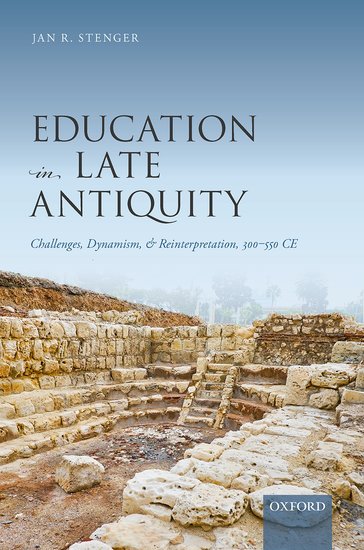
Just out: Jan R. Stenger, Education in Late Antiquity: Challenges, Dynamism, and Reinterpretation, 300-550 CE, Oxford: OUP.
ToC
Introduction
1:Educational Communities
2:The Emergence of Religious Education
3:What Men Could Learn from Women
4:The Life of Paideia
5:Moulding the Self and the World
6:The Making of the Late Antique Mind
Conclusion
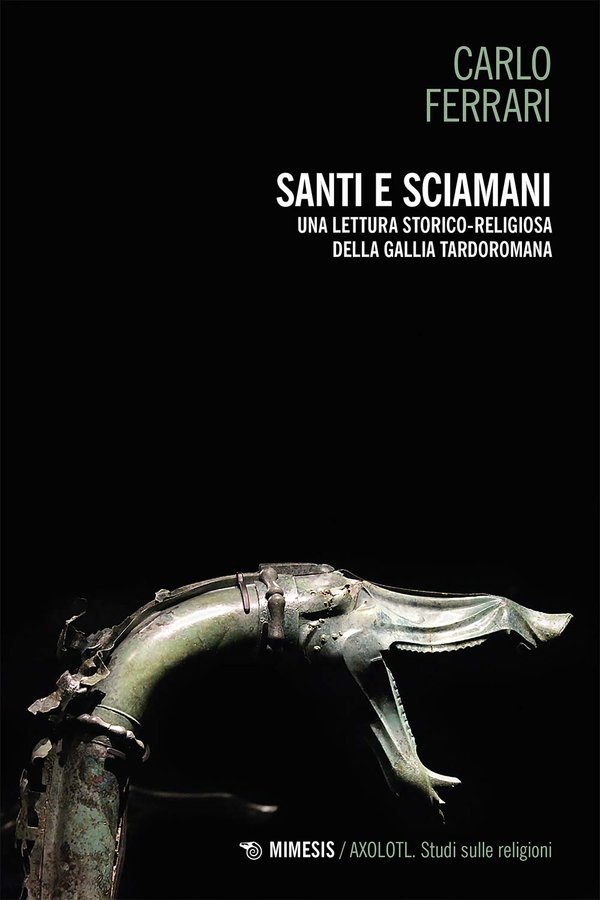
Carlo Ferrari argues for the re-emergence of Celtic – and, in fact, Eurasian – religiosity in Gaul in the upheaval of late antiquity: Santi e sciamani. Una lettura storico-religiosa della Gallia tardoromana, Sesto San Giovanni: Mimesis, 2022. See the publisher’s catalogue.
The book is an adaptation of Ferrari’s PhD thesis ‘Observatio paganorum: pratiche e comportamenti religiosi nella Gallia tardoantica (IV-VI secolo d.C.)’, Florence, 2019, which is available in open access here.