
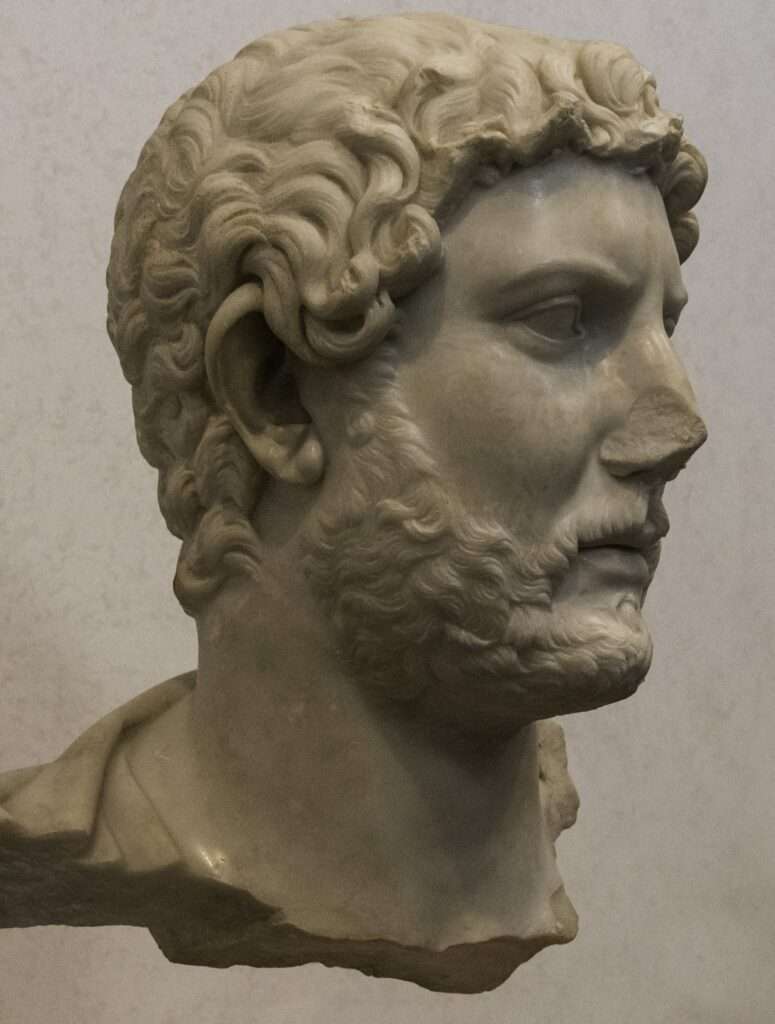
New online, RIPD, the Roman Imperial Portraits Database
Contents: Sam Heijnen and Olivier Hekster. Technical support: Thijs Hermsen.
Funding: Ammodo Science Award (2017) for the Humanities. Supported by NWO and Radboud University.
Project
Our ideas on the physical characteristics of the Roman emperors too are changing as portraits that radically differ from the standardized image are re-examined, and new methods to recognize and identify images of Roman emperors such as facial recognition are now being tested. The field of Roman portrait studies is thus constantly in motion. In order to advance our knowledge on the functioning of imperial portraits and to gain an overview of the sources currently available, the RIPD has attempted to systematically bring together extant (i.e. published) portraits of the Roman emperors in a single dataset that can be used for further study.
Goals
To do so, the project has extracted and cross-referenced published portraits of the Roman emperors from the available record as well as (online) catalogues and recent archaeological reports. The aim of the project is not so much to provide alternative readings of the available data as it aims to allow researchers to introduce quantitative questions to the study of imperial portraiture. It is worth stressing that the dataset introduced here should not be considered as a “complete” overview. As mentioned above, new portraits are unearthed each year and the identities of existing portraits are constantly reconsidered on the basis of discussions in the field of ancient history and archaeology.