
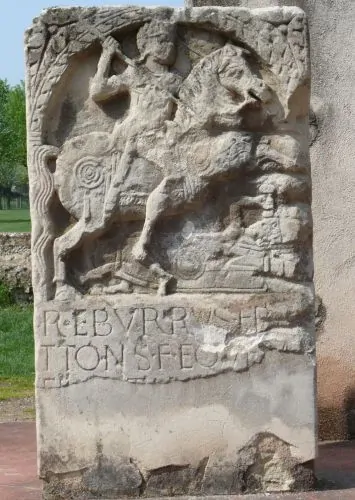

Matthew McIntosh writes on Ep. 3.12 and related issues in ‘Sidonius Apollinaris and the Unequal Protection of the Dead in Ancient Roman Gaul: Burial and Power in Later Rome’, a blogpost on Brewminate, November 17, 2026 [access].
The piece’s core argument, as summarized by Mistral Vibe, is:
- A one-sided source. The story survives only through Sidonius, who was simultaneously accuser, judge, and punisher. His own explanation (weather, an overcrowded cemetery, mounds levelled to look like empty ground) actually supplies the workmen with a possible good-faith defence that the letter never allows.
- Unequal protection of the dead. Sidonius could enforce his claim because he had aristocratic resources: money for a monument, a relative on the spot, and the social standing to punish without prior recourse to the bishop. Respect for graves was universally affirmed, but the means of redress were unevenly distributed.
- Law versus private violence. Roman law (with reference to Jill Harries) punished grave violation severely, but offered no private right to on-the-spot punishment. The bishop’s retrospective praise (discussed alongside Éric Rebillard’s work on clerical involvement in burial) does not make Sidonius’s vigilante justice procedurally legitimate.
- Commemoration as family duty and reputation management. Restoring the grave also served to rehabilitate Apollinaris the Elder’s public memory as the family’s first Christian ancestor. Here McIntosh explicitly draws on Joop van Waarden’s interpretation of the letter for both the reputational reading of the epitaph and the dating of the episode to 469/470, shortly before Sidonius’s consecration as bishop.